


Les Conseils
What Do Tights Denier Numbers Mean?
Have you ever wondered what the tights denier numbers mean? This unit of measurement, though sometimes mysterious, is essential for choosing tights that suit your style, comfort, and—most importantly—the season.
👉 Key Takeaway
The denier rating of a pair of tights affects their appearance, comfort, durability, and warmth.
- 10–20 denier: very thin and sheer tights, perfect for a “bare legs” look or for summer.
- 25–40 denier: semi-opaque tights, offering a good balance between thinness and durability for mid-season.
- 40–60 denier: opaque and durable tights that don’t show the skin.
- 70–150 denier: ultra-opaque and warm tights, ideal for cold temperatures.
Definition: What is denier in tights?
Denier is a unit of measurement that indicates the thickness of the yarn used to make tights. This is usually listed on the packaging of your tights, stockings, or even leggings with the abbreviation DEN or D (10D, 20D, 40D, etc.).
The higher the denier number, the thicker, more opaque, and more durable the tights will be. Conversely, tights with a low denier number (less than 25D) will be thin, lightweight, and sheer, creating a delicate and elegant look on the legs.
Different types of tights based on denier:

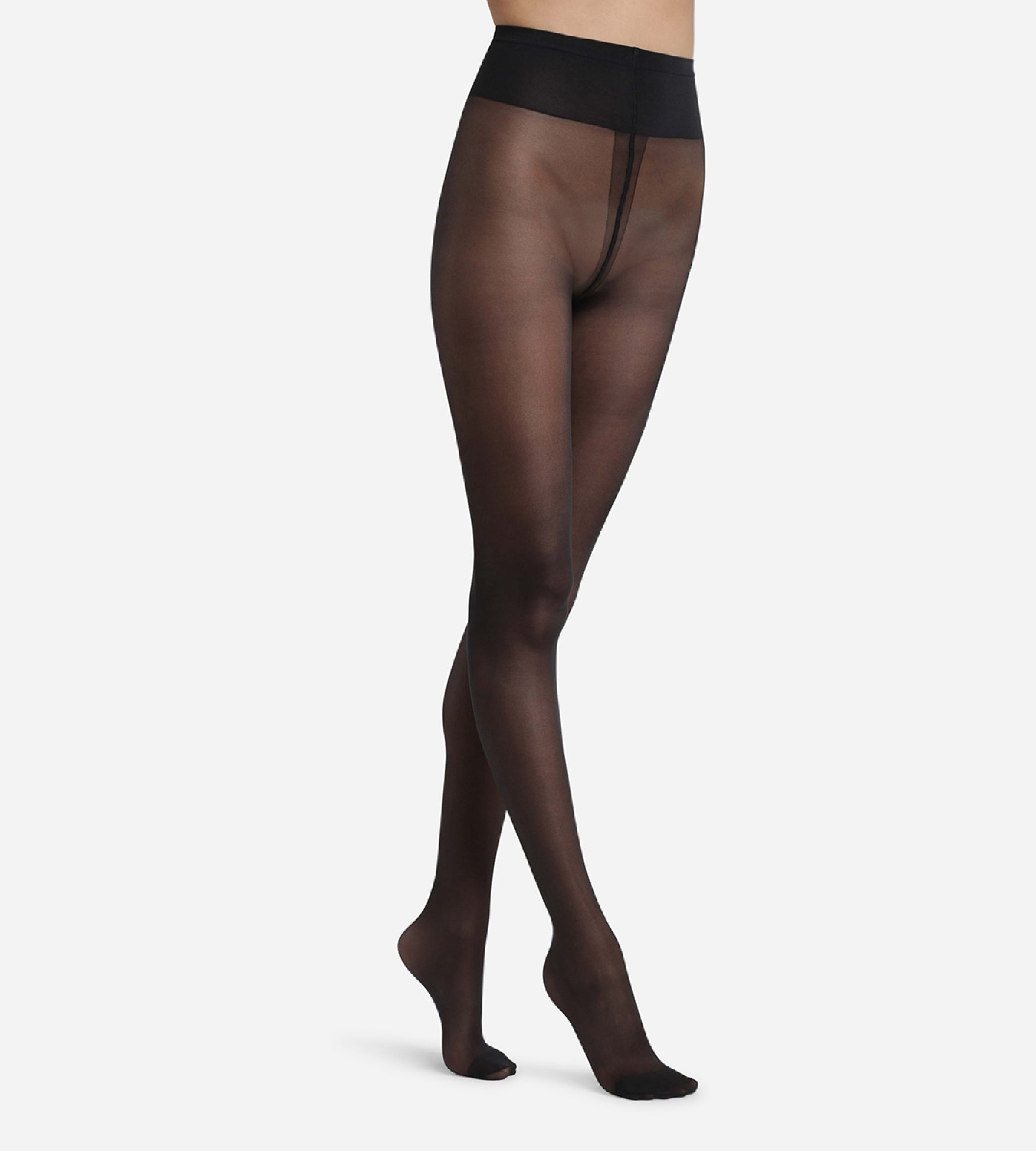


| Denier | Appearance | Durability | Ideal Season | Recommended Use |
|---|---|---|---|---|
| 5 to 20D | Very sheer, bare-leg effect | Low | Spring/Summer | Elegant outfits, ceremonies, natural look |
| 25 to 40D | Semi-sheer | Good | Transitional seasons | Everyday wear, office, going out |
| 40 to 60D | Opaque | High | Fall / Mild winter | Chic looks, dresses and skirts |
| 70 to 100D+ | Ultra-opaque and warm | Excellent | Winter | Thermal or fleece-lined tights, maximum comfort |

👌 Our tips for taking care of your tights
🧼 Wash your tights with care
Hand-wash them or use a delicate cycle in the washing machine (30°C maximum), placing them in a laundry bag to minimize friction.
💍 Remove your jewelry before putting them on
Rings, bracelets, or watches can easily snag the fabric. Also, make sure your nails are smooth before putting on your tights.
👠 Choose the right shoes
Shoes that are too tight or have inner seams can cause repeated friction and speed up wear on the tights, especially around the toes and heels.
🧦 Put them on gradually
Roll the tights down to your feet before gently pulling them up your legs. Avoid pulling sharply on the fabric to preserve its elasticity.
🧺 Store them separately
Keep your tights folded or rolled up in a drawer, away from zippers, Velcro, or sequined clothing that could snag the fibers.
🌬️ Let them air dry
Avoid the dryer and intense heat sources. Air drying helps preserve the elasticity and softness of the fibers for longer.
✨ Choose the right denier for your needs
For everyday wear or if you’re looking for extra durability, opt for tights with 30 to 60 denier or reinforced styles. Very sheer tights (10 to 20 denier) are more delicate and require extra care.
💬 FAQ: Everything You Need to Know About Tights Denier
What does “denier” mean on a pair of tights?
Denier is a unit of measurement that indicates the thickness of the yarn used to make tights. The higher the denier, the thicker, more opaque, and generally more durable the tights will be. Conversely, a lower denier corresponds to thinner, more sheer tights.
Do denier ratings affect the size of tights?
No, denier only determines thickness and opacity. Size depends on the cut and the manufacturer’s measurements.
No, denier only determines thickness and opacity. Size depends on the cut and the manufacturer’s measurements. -What denier should you choose for sheer tights?
For a bare-leg look or a very natural finish, opt for tights between 10 and 20 denier. These styles are thin, lightweight, and particularly well-suited for warm weather or occasions when you want to flatter your legs while maintaining a discreet look.
At what denier level do tights become opaque?
Tights generally become opaque at 40 denier or higher. For greater coverage and better protection against the cold, styles with 60 denier or higher are recommended.
What denier should you choose to stay warm in winter?
For winter, opt for tights with 70 denier or higher. Very warm styles, such as thermal or fleece-lined tights, can exceed 100 denier to provide additional insulation.
Are tights with a higher denier count necessarily more durable?
Yes, in general, thicker tights are more resistant to friction and repeated wear than very thin tights. However, durability also depends on the quality of the yarn, the design of the tights, and how they’re cared for.
What denier should you choose for everyday tights?
Tights between 20 and 40 denier are often the best compromise for everyday wear: they offer a good balance between elegance, comfort, and durability.
Check out DIM Mag' for all of DIM’s advice: practical guides, lingerie tips, and fashion inspiration to help you choose your essentials with confidence.


